:quality(80):format(webp))


:format(webp))
:format(webp))
A basic distinction can be made between avoidable and unavoidable waste.
Avoidable: still consumable at the time of disposal
Unavoidable: e.g., bones or shells
Projections show that around 175,000 tons of avoidable food waste are generated in Austria each year, of which around:
45,000 tons in the catering industry,
50,000 tons in the hospitality industry,
61,000 tons in communal catering, and
19,000 tons in other businesses such as coffee houses.
This corresponds to around 400,000 tons of greenhouse gas emissions from the production of unused food. Taking average purchase prices into account, this means that food worth around €320 million ends up in the trash, or €8,000 per business.
Source: United Against Waste (2016) United Against Waste: Review, survey results, outlook. Trade media discussion on January 21, 2016.
Food waste occurs in four areas: storage losses, production waste, overproduction, and plate returns. Most food waste in hotels (breakfast catering) is caused by overproduction (30–60%) and plate returns, as well as oversupply at the breakfast buffet. In many hotels, the breakfast buffet is too extensive and thus responsible for a large proportion of the waste.
40% of food waste consists of carbohydrates, including potatoes, bread, pasta, and rice. Reducing this side dish waste would have a significant impact on the total amount of food waste.
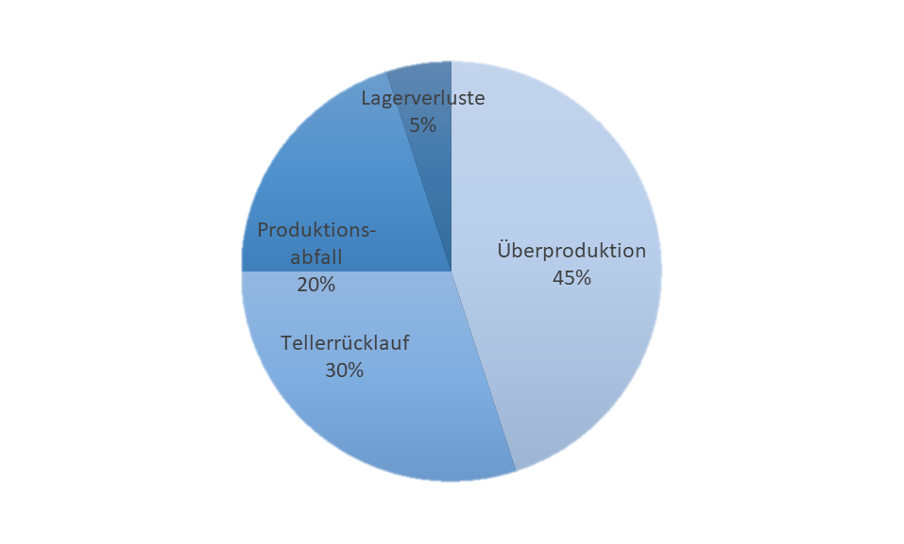
Source: own illustration, based on data from United Against Waste (2020). Food Waste 4.0. Interim Report 2020, p. 39
The costs of food waste, which arise from unused food and its subsequent disposal as waste, are primarily reflected in the costs of purchasing and kitchen staff, which account for almost 90% of the total costs.
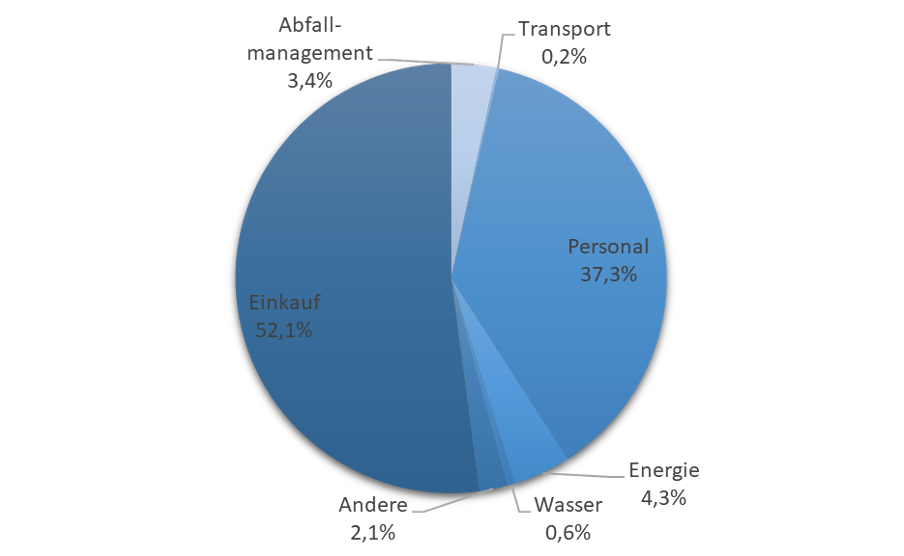
Source: Overview of waste in the hospitality and food service sector, 1.11.2013, WRAP
:format(webp))