


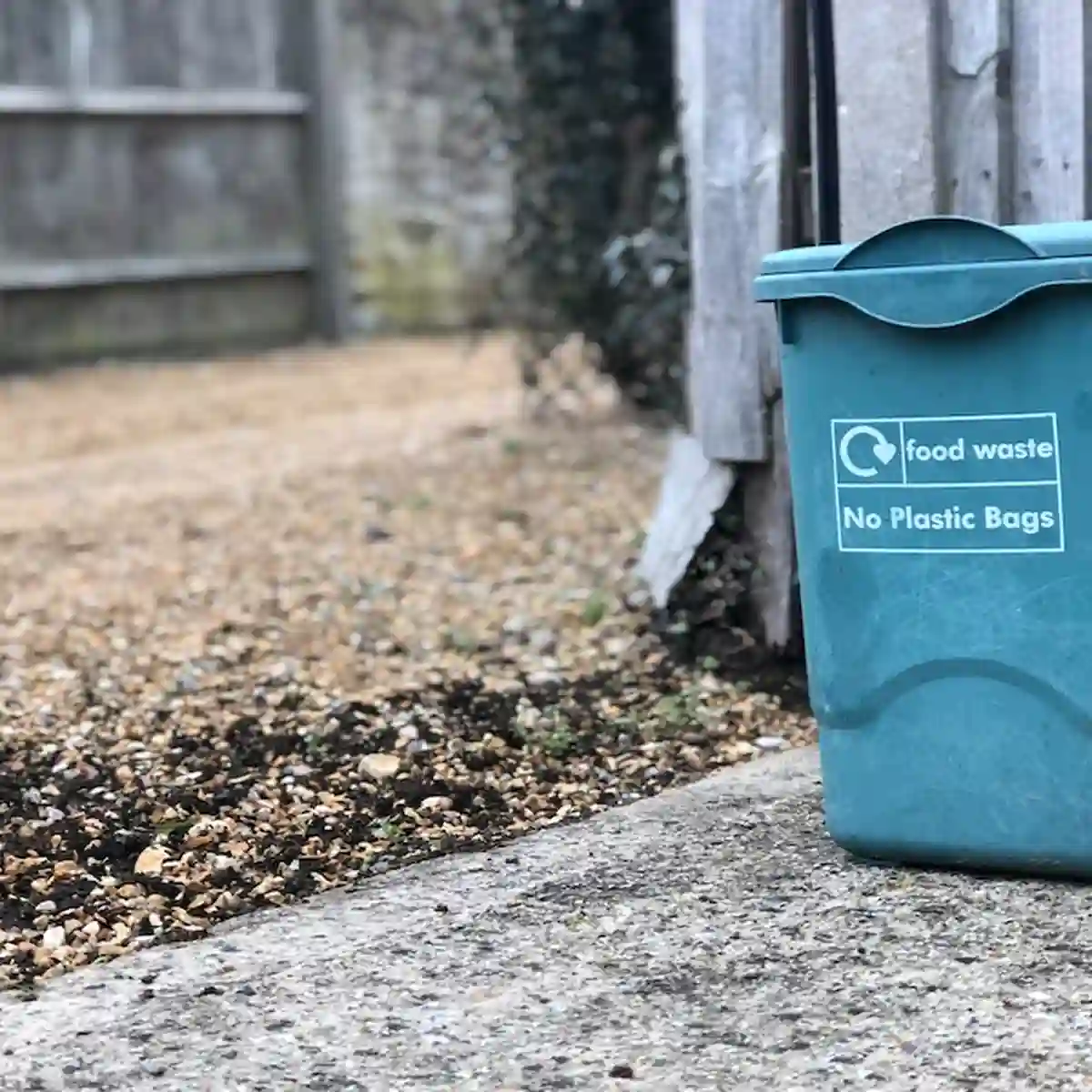

For unavoidable food waste, such as food preparation scraps, as well as waste that could have been prevented but has nevertheless been generated, it is essential to ensure proper disposal and recovery. Leftover food that is still safe to eat can be passed on to staff, guests or charitable organisations.
Separately collecting food waste that cannot be reused and sending it to composting or biogas plants helps close the resource loop. If suitable systems are not provided by local authorities or private operators, businesses can also explore alternatives such as on-site composting. Food waste can also be used to generate energy.
Introduce an internal waste collection system to separate different types of waste.
Train your staff to sort waste correctly.
Use symbols and stickers to make waste separation easier for employees.
Donate surplus food that is still safe to eat to food-sharing initiatives, such as Die Tafeln, or sell surplus meals to local customers at reduced prices, for example via the Too Good To Go app.
Offer takeaway boxes or encourage guests to bring their own containers for taking home plate leftovers, for example using the Tafelbox.
Donate unsold dishes in accordance with applicable legislation. For further information, see the guide Donating Food to Social Institutions – Legal Aspects.
Turn food waste into compost for your garden or send it to biogas plants to generate electricity or heat.